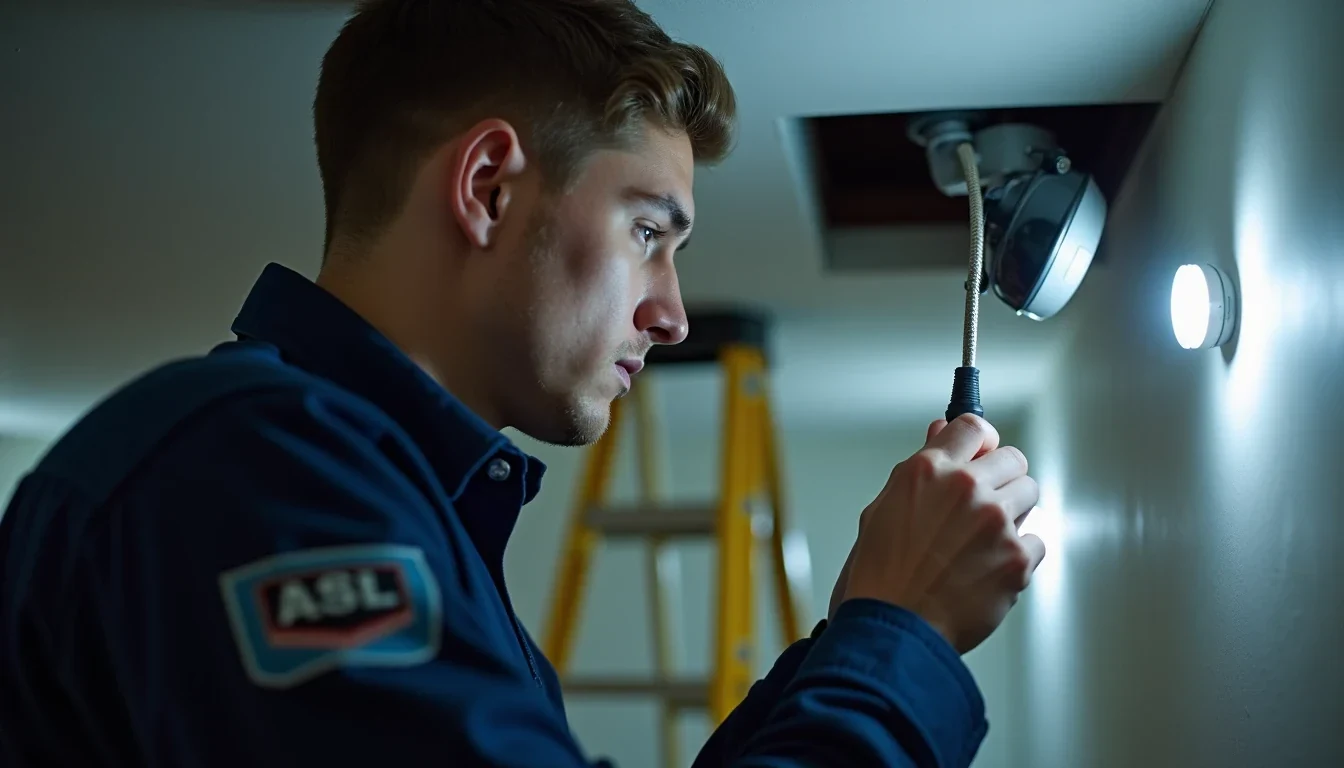
Most young South Africans chasing “tech” careers picture themselves in open-plan offices writing code. Few realise that crawling through ceiling cavities in Houghton estates, terminating CAT6 cable and calibrating AI-powered licence plate recognition, can pay more than junior developer roles at listed companies. The security installation trade has quietly become one of the most lucrative technical paths available to matriculants willing to work with their hands and think with precision.
The gap between a R9,000-month junior and a R40,000-month specialist is not years of abstract study. It is a sequence of specific registrations, certifications, and location choices most people never map out.
What legally qualifies you to install CCTV in South Africa
You cannot touch a camera for pay without PSIRA registration as an individual security service provider. The authority demands South African citizenship or permanent residency, plus a clean criminal record. Clients in Houghton and Sandton will check this before you set foot on their property.
Run your own operation and the bar rises further. Formal business registration and passing a regulatory infrastructure inspection become compulsory. Affluent homeowners treat unregistered installers as a liability they cannot afford, not a bargain they should consider.
Where the money actually sits
Location separates comfortable from serious earnings. The national average for CCTV technicians hovers around R13,500 monthly. Northern Johannesburg operators average up to R29,000. Senior specialists in Houghton itself pull R25,000 to R40,000-plus, typically with vehicle, fuel, and cellphone allowances layered on top.
The self-employed path carries fluctuation but removes the ceiling entirely. Labour rates run R800 to R1,500 per camera point before hardware markup. A single luxury residential job with 8-16 high-end IP cameras generates substantial revenue. Fixed-fee maintenance contracts with estates and commercial properties then provide predictable recurring income that salaried technicians never see.
The technical stack that commands premium rates
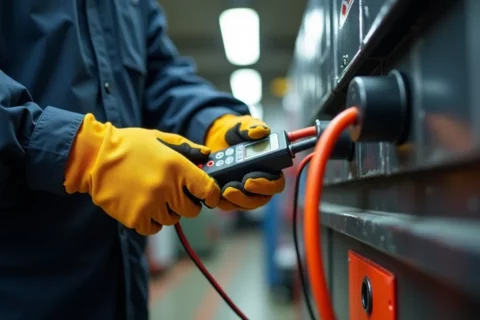
Basic analogue camera knowledge gets you entry-level work. Premium positioning demands advanced IP networking, Power over Ethernet deployment, and AI-driven analytics: human and vehicle detection that filters out animals and weather, plus licence plate recognition for access control. Manufacturer certifications from Hikvision and Dahua signal competence that clients will pay for.
Integration capability separates installers from security architects. Premium technicians connect cctv systems with alarms, electric fences, intercoms, and automated gates without creating interference between systems. Armed-response platform compatibility matters. Solar and backup power design also matter because load shedding has made uninterrupted security a non-negotiable selling point in Johannesburg’s high-end market.
The apprenticeship that actually builds skill
Six to twelve months as a junior technician in the northern suburbs teaches what classroom training cannot. Hidden conduit routing preserves aesthetic standards that wealthy clients enforce. Neat server-cabinet management prevents the spaghetti nightmares that fail inspections. Weatherproofing determines whether your installation survives its first Johannesburg summer storm.
Tyson Botha at One Point Security & Maintenance runs a mentorship model rare in the trade. He provides direct owner oversight, personal property walks for security planning, and inspection of every installation before handover. There is no delegation to unvetted subcontractors. Training emphasises correct first-time execution with original, warranty-backed equipment. Vulnerability-based design assesses actual intrusion methods rather than overselling hardware.
Twice-monthly maintenance contracts across northern suburbs teach routine upkeep: lens and rain shield cleaning, focus and night vision verification, remote viewing and recording checks, wiring inspection for wear or tampering. Installers operate under a 24-month workmanship guarantee with detailed job cards required after every service visit.
The certifications that multiply your rate
Beyond PSIRA, specific registrations unlock premium positioning. These include Department of Employment and Labour electric fencing registration, SAIDSA accreditation for alarm work, and Centurion gate-automation certification. Each additional discipline lets you quote comprehensive packages rather than camera-only jobs.
A valid Code 08 (B) driver’s licence and clean criminal record are baseline requirements for higher-paying field roles. Without mobility and trust verification, you cannot access the properties where the money concentrates.
How to start this year
The path is concrete: secure PSIRA registration, complete hands-on training through recognised industry associations or Gauteng wholesale academies, spend six to twelve months as a junior in the northern suburbs, then stack manufacturer certifications and multi-disciplinary registrations while building toward self-employment in high-income nodes.
Entry-level earnings of R9,000 to R15,000 rise to R16,000 to R25,000 at mid-level. The R40,000-plus tier is occupied by specialists who combine technical depth with business ownership and geographic focus. The ceiling is not academic credentials. It is the willingness to master a trade that wealthy property owners cannot do without, and cannot hire cheaply without paying for the failure.