
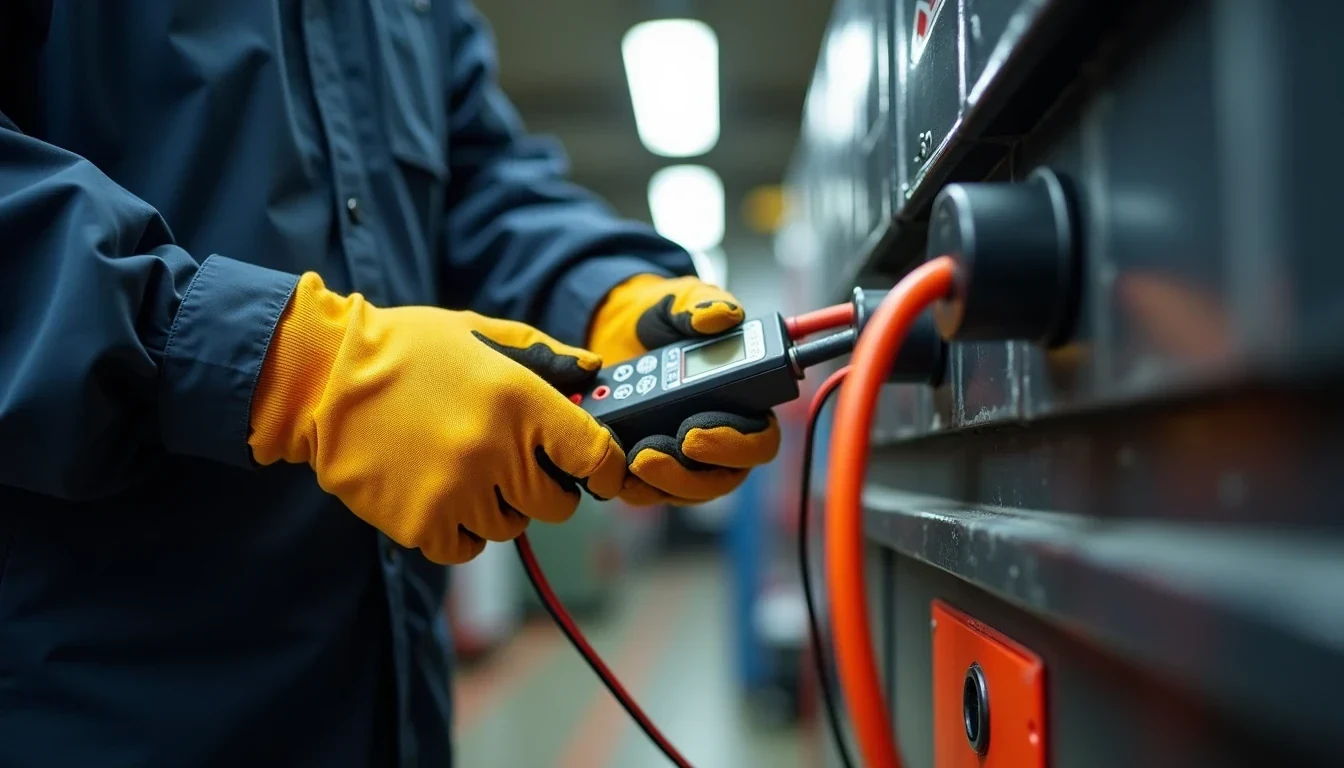
A mechanic who thinks an orange cable is just another wire will have a very bad day.
Hybrids and EVs did not kill the workshop; they changed its syllabus. You still need knowledge of tires, suspension, brakes, steering, and all normal vehicle systems. You also need to know how to isolate a traction battery, read battery fault codes, handle thermal management loops, understand regenerative braking, and work around power electronics without becoming a cautionary tale.
Industry leaders already know this. As local EV and hybrid production and sales grow, the skills conversation has moved past “future trend” to “we need technicians who can actually touch this stuff safely.” This is a shift toward a real trade with high-voltage add-ons, not a random shortcut course.
Under the bonnet
A petrol engine gives you noise, heat, belts, plugs, and familiar mechanical drama. An EV or hybrid adds a system that can seriously injure you if you guess.
Daily work shifts toward safe isolation, battery pack checks, inverter and converter faults, cooling systems for the battery and motor, and regenerative braking diagnosis. Ordinary tasks remain: tires wear out, suspension bushes fail, and brake components still need attention. The person under the bonnet now needs to think like both a mechanic and an electrical technician.
The old “I can fix cars because I grew up around cars” line is insufficient here. You can be brilliant with spanners and still be unsafe around a live high-voltage system. A traction battery is not the place for guesswork. Modern EV systems can operate at hundreds of volts; the wrong touch can mean electrocution, severe burns, or an arc flash that turns a workshop mistake into a hospital bill.
Getting in
Start with a proper automotive trade. Motor mechanics, auto-electrical work, or mechatronics are the cleanest routes. This base matters because the high-voltage layer sits on top of normal vehicle knowledge, not instead of it.
merSETA states that automotive apprenticeships mix workplace learning with theory and can run for up to four years. This is the real route, not a weekend certificate from a glossy website. The employer often covers the cost during an apprenticeship, which makes getting into the right workshop more important than buying a course first. Your first step is to enter a recognized trade stream, not to chase the cheapest online badge.
A decent apprentice path looks boring at the start. You learn routine systems first. Then you move into hybrid safety and diagnostics once you understand what can be touched, what must be isolated, and what absolutely must not be probed with the nearest screwdriver. This sequence is crucial. Jumping straight to “EV training” without the base trade leads to confusing familiarity with competence.
Trade path
Motor mechanics is the obvious choice. Auto-electrical is the specialized one. Mechatronics is broader if you can access it.
Entry requirement: a route into a recognized apprenticeship or training program, usually through an employer, dealership, or training partner that accepts the relevant trade stream. Duration: up to four years for an apprenticeship. Cost: often employer-funded, with the learner earning while training. First step: find a workshop, dealer network, fleet operation, or training employer that is taking on people for the trade, then ask which path they recognize.
If you are in a smaller town, access, not ability, is often the challenge. You may not have a dealership nearby that sees many hybrids. This does not make the trade impossible. It means you need to be picky about where you start, because experience on ordinary petrol cars alone will not prepare you for high-voltage work.
Base route length
It’s long enough to matter. Four years is not a joke, and that’s why it works.
A short course can teach you the language of EVs. It cannot give you the judgment that comes from repeated hands-on work, the habit of checking isolation properly, or the nerve to stop when the procedure says stop. The workshop does not care that you watched a few videos. The battery certainly does not care.
A real high voltage course
Once you have the base trade, look for manufacturer-specific training or an accredited high-voltage program. BMW, Mercedes-Benz, Toyota, Volvo, and other OEMs run their own training paths for the vehicles they sell and service. Private providers also offer high-voltage courses, but the useful ones include real practical work, clear entry requirements, and industry recognition.
Entry requirement: usually a completed trade or serious prior automotive experience. Duration: varies by provider and brand, but the serious ones include practical sessions, not just videos and slides. Cost: separate from apprenticeship funding, so expect to pay if it is a private specialist course. First step: check whether the provider accepts people without a trade. If they do, be suspicious.
A legitimate program should state three things clearly. First, who can enter. Second, how much hands-on work is included. Third, what the certificate actually allows you to do. If the brochure only says you have “completed an introduction to EVs,” that is not the same as being cleared to work on live high-voltage systems. Awareness and competence are different products.
Legit check
Ask for the practical hours. Ask who recognizes the certificate. Ask whether graduates can perform high-voltage work or whether they have only done an introductory course. Ask what safety training is included, from insulated gloves and face shields to lock-out and tag-out procedures. Ask what equipment the course uses for isolation checks, and whether the learners work on actual vehicles or just diagrams.
Then check for obvious traps. If a program is entirely online and promises to make you “EV ready,” walk away. If the only selling point is a foreign logo and a payment link, walk away. Before you spend rand on an overseas online academy, search merSETA apprenticeships, manufacturer programs, and accredited local providers first. A flashy website is not a qualification.
The safety rules
High-voltage work requires a boring personality in the best possible way.
You isolate the system. You lock and tag it so nobody else activates it while you are working. You verify zero voltage with the correct meter. You wear insulated gloves rated for the job, use insulated tools, put on eye and face protection, and follow the manufacturer’s procedure instead of improvising. In some systems, you wait for the discharge time before even considering touching the pack.
This sounds fussy until you remember the alternative. Modern EV battery packs can hold enough energy to quickly ruin a body. The danger is not theoretical. Untrained work can lead to fatal shock, burns, arc flash, or thermal runaway if a pack is damaged or mishandled. The orange cable is not decorative; it reminds you that this is a different game.
Where the work sits
Dealerships need technicians. Independent workshops need them too, because vehicles leave warranty, owners refuse dealer pricing, and someone still has to diagnose faults. Fleet operators are another lane, especially logistics, buses, and delivery companies that want electric vehicles on the road and not in a parking bay with a dead battery. Battery repair and recycling shops will also become a thing, because every expensive pack eventually needs a decision made about testing, rebuilding, or safe disposal.
There is a bigger pattern here for anyone who thinks the route is the same as the title. People who learn high-voltage work properly will be closer to the expanding parts of the automotive industry, not the shrinking ones. But the money does not flow to the person who watched an intro course and bought a badge. It flows to the technician who can prove, in a workshop, that they understand the system, the risks, and the repair.
The trade is changing. The spanners are still there. The orange cables are just not forgiving.