
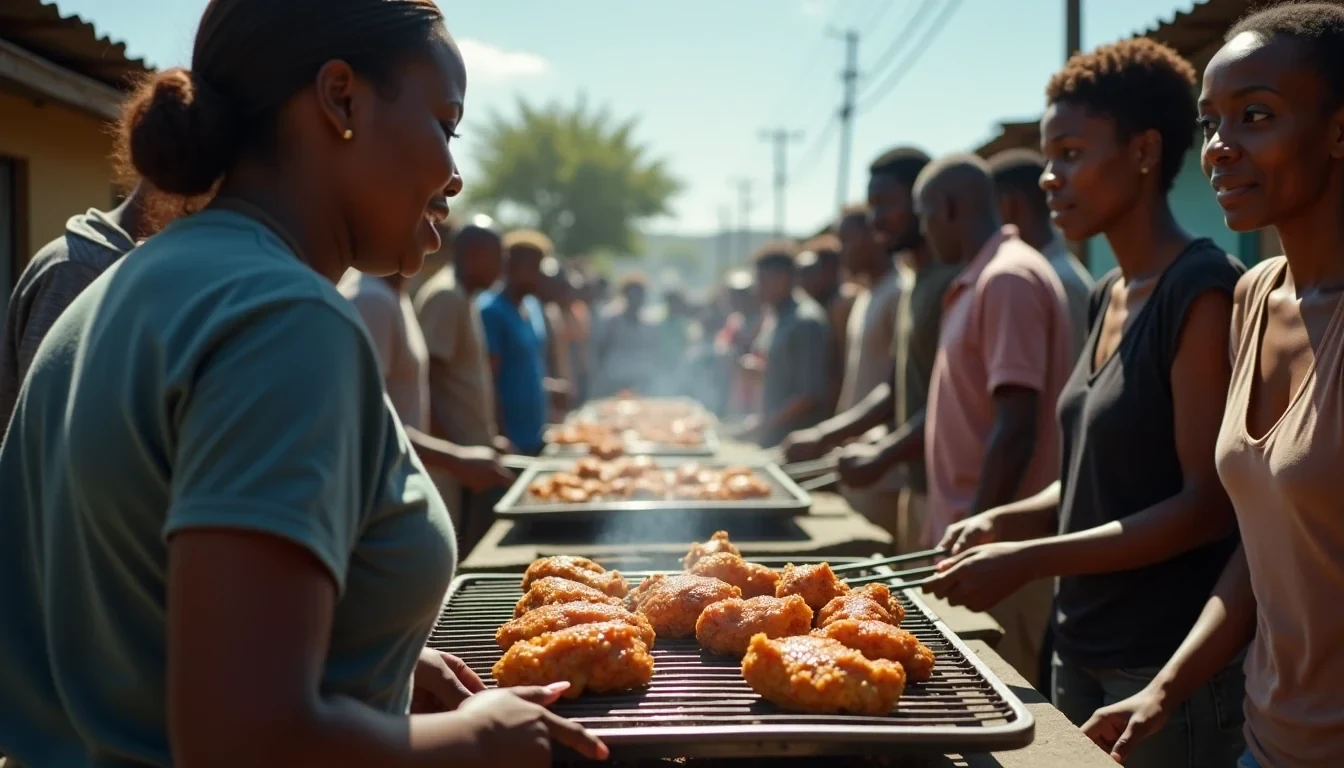
Two chickens on a braai can look like lunch. Do that at scale in a packed township, keep the line moving, and it looks a lot more like a business model. People miss this while they talk themselves into mall leases, business-plan templates, and other expensive theatre.
A South African woman is reportedly turning braaied chicken pieces in a busy township into about R720,000 in monthly revenue. That number is not cute. It reminds us that some of the cleanest money in this country is still sitting in plain sight, where people need affordable food every day and do not care whether the chef has a corporate email address.
The money is in the queue
R720,000 a month sounds like headline bait until you break it into basic mechanics. This kind of operation depends on volume, repetition, and an existing customer base, not a single expensive product. If you are in one of the country’s busiest, most densely populated townships, foot traffic is not a marketing strategy. It is the whole point.
Chicken pieces work because they hit the sweet spot: familiar, filling, quick, and easy to price for cash customers. People are not driving across town to admire the branding. They want lunch, supper, or something hot after a long day. If the queue moves fast, the chicken is consistently good, and the price feels fair, the same people come back tomorrow and bring two friends on Friday.
That is how informal food businesses quietly become serious businesses. They do not look “professional” in the way consultants mean it. They are dependable in the way customers actually care about.
What does it cost to start
A basic braai food setup can start from under R5,000 to R10,000 if you keep it lean. That can cover a small grill or braai stand, tongs, knives, trays, charcoal, spices, packaging, and the first stock run. If you push into a more serious operation with extra braaiers, staff, a proper prep area, and bigger cold storage, the bill rises fast. The business gets bigger, so the cash requirement gets bigger too.
The first step is not buying equipment. It is confirming demand. Stand where people already buy food, watch what sells out first, and notice what runs out before the day ends. If a street already has people queuing for vetkoek, kota, amagwinya, shisanyama, or chicken, that is not random. That is the market talking.
How long does it take
A food business like this can start earning almost immediately if the location is right and the setup is simple. The real issue is not getting the first sale. It is surviving the first month without pretending that one busy Saturday means you have built an empire.
The operators who win in township food do boring things well for a long time. They source in bulk, keep waste down, and make sure the product tastes the same on Monday as it does on payday weekend. Consistency turns a stall into a habit. In food, habit is money.
If you are starting from zero, the ramp is usually measured in months, not years. Month one is testing. Month two is fixing mistakes. Month three is usually when you learn whether people are coming back because they like the food, or because they were simply hungry that day. The second answer is not a business.
How do you get in
You do not need a degree to sell food. You do need discipline, a sensible location, and the patience to do the same useful thing every day without getting bored.
Start by looking at everyday problems in your own area. Where do people queue longest? What do commuters complain about? What food do people buy even when they are trying to save money? That is the gap. The opportunity is usually hidden inside something ordinary that everybody else has ignored because it looks too simple to be “big business.”
For young people, that is the useful lesson here. The township economy is not a side note. It is massive, worth hundreds of billions of rand, and it keeps thousands of entrepreneurs, staff, and suppliers moving. A person braaing chicken in the right place can feed workers, create jobs, and build proper cash flow without waiting for anyone to hand them a corporate badge.
If you are thinking about a route like this, your first step is practical: 1. Spend a week watching demand in a busy area. 2. Figure out what is already selling and what is missing. 3. Test one product at small scale. 4. Track how much stock moves, what time people buy, and what price they accept without fighting you.
That is better than writing a six-page plan nobody will read.
How to check this is legit
A revenue claim is not the same thing as audited accounts. If someone says a township food business is bringing in R720,000 a month, treat it as a reported figure, not a guaranteed template.
Check the basics before you romanticise it. Ask whether the business is on a main commuter route, near a taxi rank, or in a high-density residential cluster. Ask how many pieces are sold daily, what the average spend per customer is, and whether the operation runs from lunch into the evening. If the numbers do not make sense at that level, the headline is doing too much work.
Also look for the ugly side of the trade. Township trading is not all charm and hustle. There are security risks, supply interruptions, cash handling headaches, and occasional pressure from people who think “informal” means unprotected. The businesses that last usually build strong local relationships, keep a tight reputation, and reinvest carefully instead of spending like the good times are permanent.
Why this matters more than the headline
The headline is the money. The lesson is the location.
Many young South Africans still get sold the same thin list of respectable paths, as if the only real work is the kind that comes with a laptop, a title, and a manager who schedules a meeting about the meeting. Meanwhile, the local economy keeps rewarding people who solve real problems in real places: food, transport, delivery, repairs, beauty, basic services. These are the things people actually pay for.
That is not romantic. It is better than romantic. It is bankable.
If you want to think bigger, this is where the modern version of entrepreneurship starts: not with a grand pitch, but with one repeatable product in a place where people already need it. A phone, a WhatsApp line, M-Pesa-style thinking without the fantasy, bulk buying, decent hygiene, and enough consistency that customers stop comparing you with everyone else.
The township braaied-chicken story lands because it strips away the usual nonsense. No glass office. No venture capital mood board. No borrowed jargon. Just food, demand, and execution. This kind of business looks small from the outside and turns out to be the one printing money while everyone else is still polishing their LinkedIn headline.