
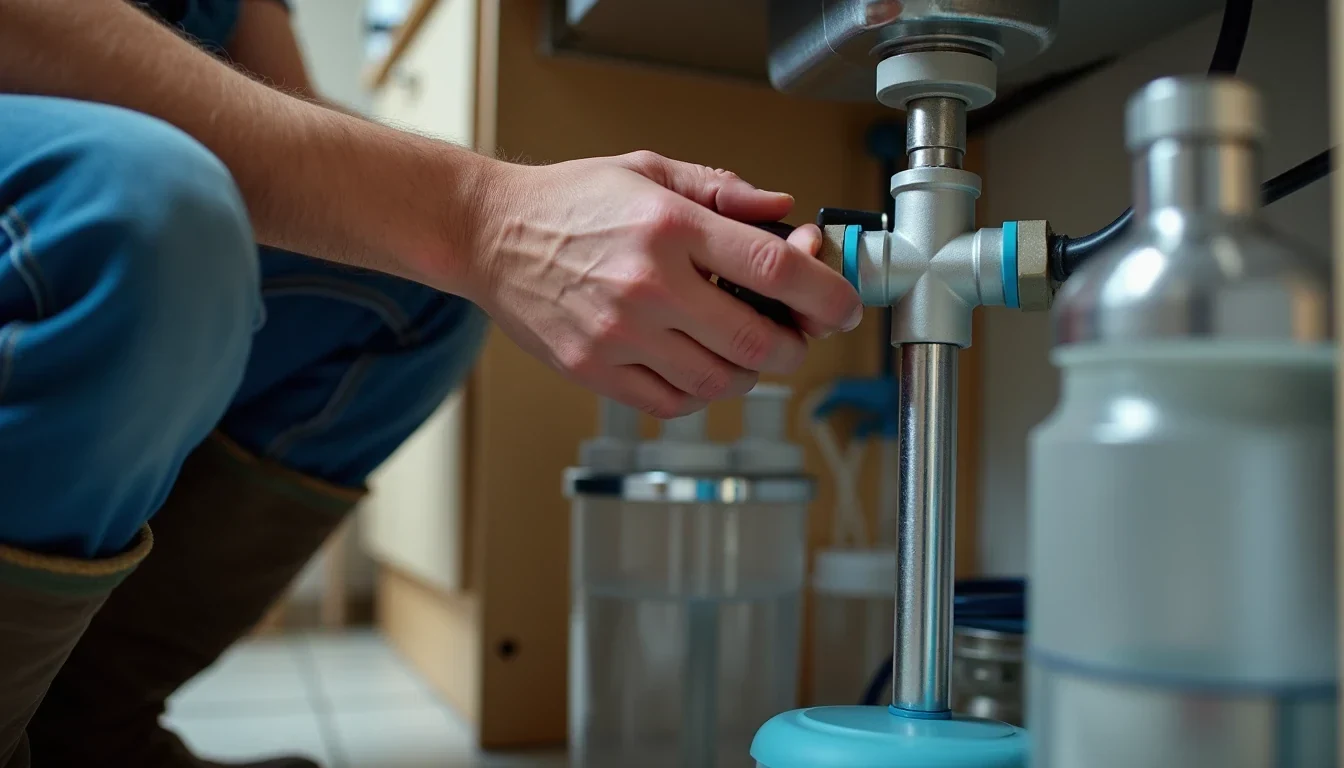
Most people hear “water sector” and picture a municipal office, a lab coat, or a tender scandal. The actual entry point is less glamorous and more useful: somebody has to install the thing, carry the box, test the pressure, swap the membrane, answer the phone, and get the unit working before the family starts boiling kettle water again.
Water filtration is one of the cleaner backdoors into technical work for matriculants. You do not need a degree to get your hands on real equipment, nor do you need to pretend to be a genius. You need decent maths, a steady pair of hands, enough discipline not to flood a kitchen, and the kind of patience that survives a leaking fitting on a Friday afternoon.
The job most school-leavers never hear about
The phrase “water job” sounds boring until you look at the actual roles. A Trainee Water Filtration Technician spends days helping with under-sink systems, whole-house filters, and RO water filter installations, while learning water testing, pipe fitting, and basic electrical connections. This is not a fake internship with a nice title. It is the sort of work that teaches you how systems behave under pressure, a useful skill whether you stay in filtration or move into plumbing, solar, or general technical services.
Plumber’s Assistant is another solid entry point. The work is simple enough to start, but not easy enough to coast through. You work under a licensed plumber, thread pipes, mount brackets, and help line up the physical layout before the expensive bits go in. Cost to start: often just your Matric, a transport budget, and work boots. Duration: usually the first few months are pure learning. First step: apply to plumbing firms, water treatment installers, and maintenance teams that take assistants.
Then there is Apprentice Process Controller, the quieter role most people overlook. You are not on the roof or under the sink. You are tracking pressures, flow rates, and tank levels at a municipal or private treatment site. Cost to start: Matric, with core mathematics and physical sciences preferred. Duration: months to years, as this is a path into proper operations work. First step: target plants and companies that advertise junior operations or apprentice control roles and ask what on-the-job training they actually run.
What the work actually looks like
Reverse osmosis sounds like something invented to sell expensive bottled water in a lab coat. In practice, it is a kitchen unit with a job to do. A typical under-counter system includes pre-filters, an RO membrane, a post-filter or mineraliser, a storage tank, a dedicated faucet, a feed-water connection, and a drain saddle for wastewater.
The pre-filters do the dirty work first. Sediment and carbon block filters catch grit, rust, and chlorine. The membrane does the heavy lifting, stripping out dissolved salts, heavy metals, and other small unwanted bits through a semi-permeable layer rated at 0.0001 micron. After that, the post-filter or mineraliser sharpens the taste and can put some minerals back into the water before it reaches the tap. The tank stores the purified water, and the separate faucet lets the user draw it off without mixing it back into the household supply.
The installation sequence is straightforward if you have been shown it properly. Shut off the water and release pressure. Fit the feed adapter. Mount the faucet. Attach the drain saddle. Position the tank and the unit. Flush the system and check for leaks before anyone starts drinking from it. A popular step-by-step video, `7mDIY – Reverse Osmosis Installation` from US Water Systems, has racked up 392K views over six years because people like seeing the job done in plain sight rather than explained in a brochure.
What you need to get in
The entry requirement for most school-leaver roles in this sector is a National Senior Certificate, with core mathematics and physical sciences preferred. A technical Grade 12 equivalent also carries weight. No one serious is asking for a university degree just to learn how to mount a filter housing or read a pressure gauge.
The useful skills are basic but not optional. You need mechanical comfort, attention to detail, and enough organisation not to lose fittings in the back of a bakkie. A clean driving licence helps a lot because delivery and field work are part of the game. If you can learn quickly, take instruction without getting precious, and show up on time, you are already ahead of a depressing number of applicants.
The sector works for people from township and small-town backgrounds. You can start with a Matric, a decent phone, a cheap laptop if you are moving into admin or sales, and a willingness to do real work. You do not need to wait for a lecture theatre to validate you.
Which route pays first
Warehouse or Parts Assistant is one of the duller-sounding roles and one of the most practical. You pack outgoing installation parts, receive stock, and update inventory for housings, tubes, and replacement membranes. Cost to start: Matric, usually with no special qualification beyond being organised and reliable. Duration: immediate entry if a company is hiring. First step: apply to filtration suppliers, plumbing wholesalers, and installation firms that need someone who can keep stock under control.
Delivery and Runner Driver is for people with a clean licence and a tolerance for traffic. You move purification units, chemicals, and replacement filters between the warehouse and the job site. Cost to start: a valid driver’s licence and transport reliability. Duration: as soon as you can be trusted with company goods. First step: ask local installers and service companies whether they need a runner or delivery hand before you waste time applying for office jobs that only want spreadsheets.
Internal Technical Sales Trainee sits on the commercial side. You learn the system configurations, read water test results, and recommend a first filter setup to residential customers. Cost to start: Matric, strong communication, and enough technical curiosity not to fake your way through a product conversation. Duration: a few months to build product knowledge, then longer if you move into account management. First step: apply to companies that sell and maintain filtration systems and ask whether trainees shadow field techs before they sell anything.
Service Centre Operator is less visible but often more stable. You track filter lifespans, book maintenance visits, and deal with incoming queries when a client’s water tastes off or a membrane has given up. Cost to start: Matric, good admin habits, and a calm phone manner. Duration: immediate if the company has a service desk. First step: apply to firms with maintenance contracts, because they usually need someone to keep the client side from turning into chaos.
How to know a real offer from a fake one
Water work attracts both genuine operators and people who think “training” means paying for the privilege of being ignored. If a company wants money upfront for a vague opportunity, ask hard questions.
Check whether the business has a real service footprint, a visible physical base, and actual after-sales work. Ask who does the installations, who signs off the work, and whether staff learn on the job or disappear into subcontracting limbo. If they claim to train technicians, ask what the first 30 days look like, what tools you will touch, and whether there is any written process. A serious company can answer without sounding offended.
Aqua Centurion is the kind of local reference worth studying because it has been in Pretoria since 1998, says it has served more than 1,000 homes, and frames its work around fitting systems right and looking after them for life. That is the sort of operation that can turn a curious school-leaver into someone who actually understands the trade rather than someone who just owns a uniform.
Where the ladder goes after the first rung
The fake story about technical work is that it traps you at the bottom. The real story is more interesting. A Trainee Water Filtration Technician can move into senior installation and diagnostics, then into commercial systems and repairs. A Plumber’s Assistant can work toward licensing and independent contracting. An Apprentice Process Controller can grow into a lead controller or plant supervisor. A Warehouse or Parts Assistant can become an inventory manager or logistics coordinator. A Sales Trainee can end up running commercial accounts.
The other route is even more obvious if you think like a South African who likes not being paid in rand forever. Once you know the equipment, the parts, and the service cycle, you can start your own small installation and maintenance business. This is the long game. It is not glamorous, but it is very real. Companies like Aqua Centurion did not survive 28-plus years by being decorative.
Why this industry keeps showing up
Water is not a trend. It does not care about your career mood board. Homes want drinking water they can trust. Offices want fewer bottles. Restaurants, salons, and medical rooms need reliable systems that do not embarrass them in front of clients. Businesses pay for systems that work and maintenance that keeps them working.
That demand creates a practical opening for young people who want technical work without going through the university funnel. Solar and battery installation have already shown what happens when a basic infrastructure problem collides with skills scarcity. Water filtration sits in the same lane. It is less flashy, less TikTok-friendly, and more likely to pay rent.
The useful part is not the branding. It is the fact that one skilled person can install, maintain, repair, and support systems that households and businesses need every day. If you can learn the mechanics, show up consistently, and stay useful, this is not a dead-end job market. It is a ladder with a lot of people still pretending not to see it.